If you used to devour books and now struggle to finish one a month, you're not alone. Work, family, phones and plain tiredness all compete for the same evening hours. The good news: you don't need a dramatic reinvention. A few small changes to when, where and what you read usually make the biggest difference.
1. Read a little, every day
Consistency beats big weekend binges. Ten pages a day is about 3,650 pages a year, which is ten or more average novels. Twenty pages a day doubles that. A small daily target is easier to protect than a vague plan to "read more", and it keeps you connected to the story so you're excited to pick it back up.
Not sure what a daily target should be? The reading goal calculator turns a yearly goal into pages per day.
2. Attach reading to something you already do
Habits stick best when they ride along with an existing routine. A few popular pairings:
- Morning coffee or tea: read until the mug is empty.
- Lunch break: one chapter before you check your phone.
- Bedtime: a set number of pages after you get into bed.
- Waiting rooms, school pickup and commutes: keep an ebook or audiobook ready.
3. Make your book easier to reach than your phone
Put your current read where your phone usually lives: the nightstand, the couch arm, your bag. Some readers charge their phone in another room at night so the book is the only thing within reach. Friction matters. If the book is upstairs and the phone is in your hand, the phone wins.
4. Always have the next book lined up
The gap between books is where reading momentum dies. Before you finish your current read, choose the next one and have it ready, whether that's a library hold, a book on your shelf or a sample on your e-reader. A short, written TBR ("to be read") list takes the decision fatigue out of it.
5. Quit books you aren't enjoying
Permission granted. A book you dread opening can stall your reading for weeks. Many readers use a simple rule, like giving a book 50 pages (or a few chapters) before deciding. Not finishing a book isn't failure; it's making room for one you'll love.
6. Read what you actually like
Reading more is much easier when you're reading for fun. If romance, cozy fantasy or cozy mysteries make you want to keep turning pages, lean in. "Guilty pleasure" reads are just pleasure reads. If you want inspiration, try our lists of cozy fantasy, romantasy and cozy mysteries.
7. Mix in shorter books
A 700-page epic is wonderful, but alternating it with novellas, short story collections and shorter novels keeps you feeling that "finished a book" boost. Shorter books are also great for getting out of a slump.
8. Count audiobooks and ebooks
Audiobooks let you read while you walk, cook, fold laundry or drive. Ebooks fit on your phone for those in-between moments. Whether they "count" toward your goal is your call, and plenty of readers happily count them.
9. Use your library
A library card makes reading more much cheaper. Many libraries also lend ebooks and audiobooks through apps. Placing holds on books you're excited about gives you a gentle due date, which is surprisingly motivating. Our book budget calculator shows how much borrowing can save.
10. Create a reading nook
It doesn't need to be Pinterest-perfect. A comfortable chair, good light, a blanket and a spot for your drink are enough. Having one place that means "reading time" helps your brain settle in faster.
11. Set a goal that motivates you (then hold it loosely)
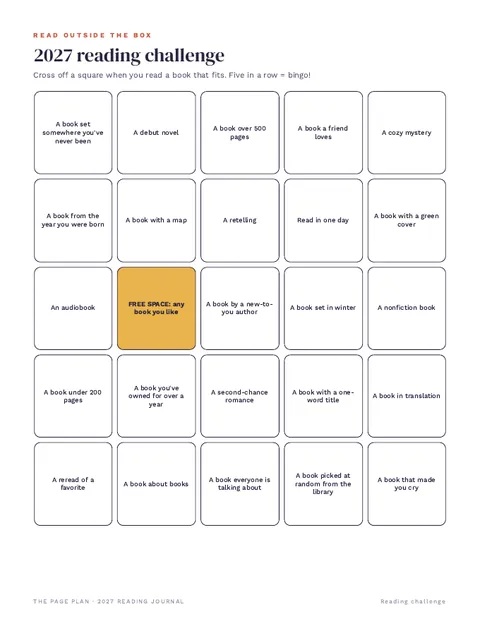
Some readers love a number, like 24 or 52 books a year. Others prefer goals like "read one classic a season" or "try three new genres". A reading challenge is a fun way to add variety. If a goal starts to feel like homework, change it.
12. Track what you read
Keeping a simple log of books you've finished is motivating: watching the list grow makes you want to add to it. Tracking also helps you notice what you love, so choosing the next book gets easier. Here's how to start a reading journal.
13. Read with other people
Book clubs, buddy reads and simply texting a friend about a book give you a reason to keep going. Even a two-person "let's both read this by the end of the month" plan works.
14. Plan for slumps
Everyone hits reading slumps. When it happens, go back to a comfort read, try a short book, switch to audio or read something completely different from your usual. A slump is a pause, not the end of you as a reader.
A simple starter plan
- Pick a daily page target (start with 10 or 20).
- Choose one habit to attach it to.
- Put your book where your phone usually is.
- Line up your next two books.
- Write down every book you finish.
Try it for a month and see how many books you finish. Most people are pleasantly surprised.
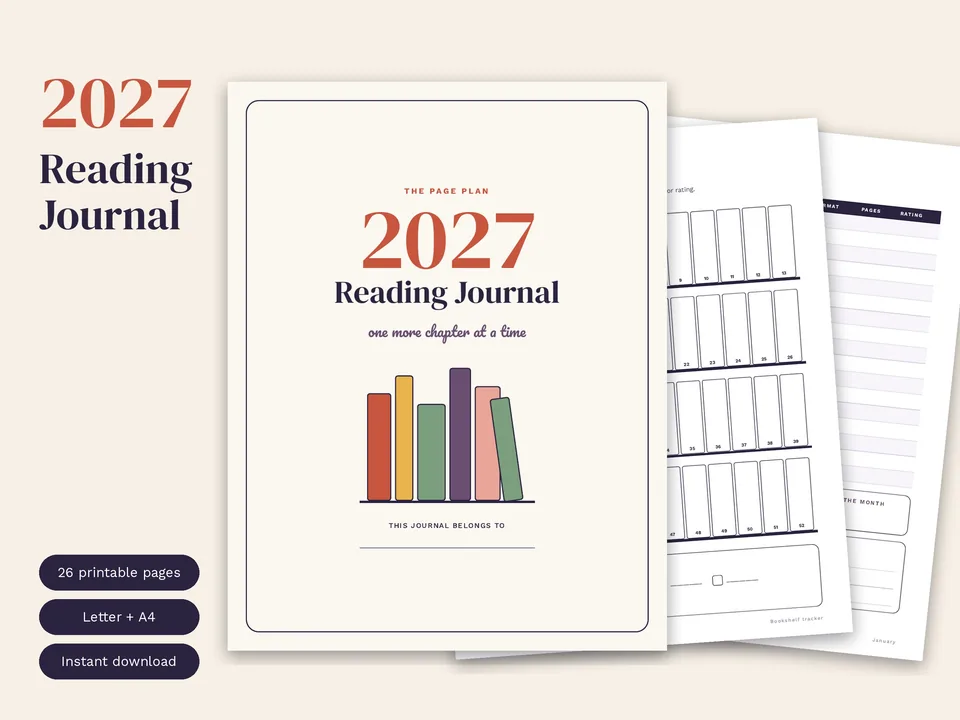
Track every book of 2027.
Our printable 2027 Reading Journal has goals, a 52-book bookshelf, monthly logs, reviews, a TBR list and a reading challenge. 26 pages, print at home.
Turn a yearly book goal into books per month and pages per day.
Our free reading goal tool works it out in seconds. No sign-up.
Open the reading goal toolQuestions people ask
How can I read more books if I'm busy?
Aim for small, daily reading sessions attached to routines you already have, like morning coffee or bedtime, and use audiobooks during chores and commutes. Ten to twenty pages a day adds up to many books a year.
Is it OK to stop reading a book I don't like?
Yes. Quitting a book you aren't enjoying frees up time for one you will. Many readers give a book 50 pages or a few chapters before deciding.
How many pages should I read a day?
It depends on your goal. About 10 pages a day adds up to roughly 10 average novels a year, and 50 pages a day is about a book a week. The reading goal calculator works out your exact number.